Institutional-Grade Systems, Rebuilt for
Hedge fund overview visual
Capital Efficiency

Hedgefund Project Overview

Breakeven is building an AI-controlled quantitative trading infrastructure that lowers the capital, compute, and talent barriers that traditionally make hedge-fund-grade systems inaccessible.

algo trading meme reel
$0
bots made this. humans cried watching.
Pepe — feels good man
PepeTrade 3000
"Feels good man. Bot bought dip at $0.31. Now $4.20. Based."
24/7 grind no emotions based
Trades today: 12,847 Win rate: 94.2% Sleep: NEVER
Wojak — normal person crying
Wojak (me) vs Bot
"I read 40 articles.
Watched 12 YouTube vids.
Bot ran 9,000 calculations.
Bot won. I cried."
-68%
me
+420%
the bot
Fry — not sure if
Chad Bot vs Virgin Trader
Chad Bot
Trades in microseconds. No sleep. No mercy. Pure profit energy.
Virgin trader
"Maybe I should wait for confirmation..." *misses the trade*
Running 847 parallel strategies simultaneously
Stonks chart (bots only)
UP ONLY
humans left the chat at bar 3
Hedge Fund Context

What is a hedge fund?

A quick context section before looking at Breakeven's specific problem and solution design.

What are hedge funds illustration Core Explanation

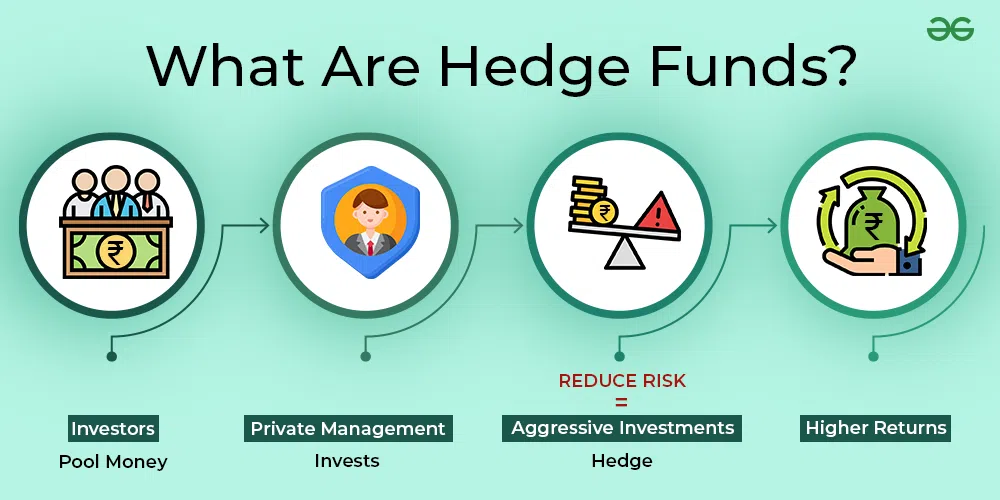
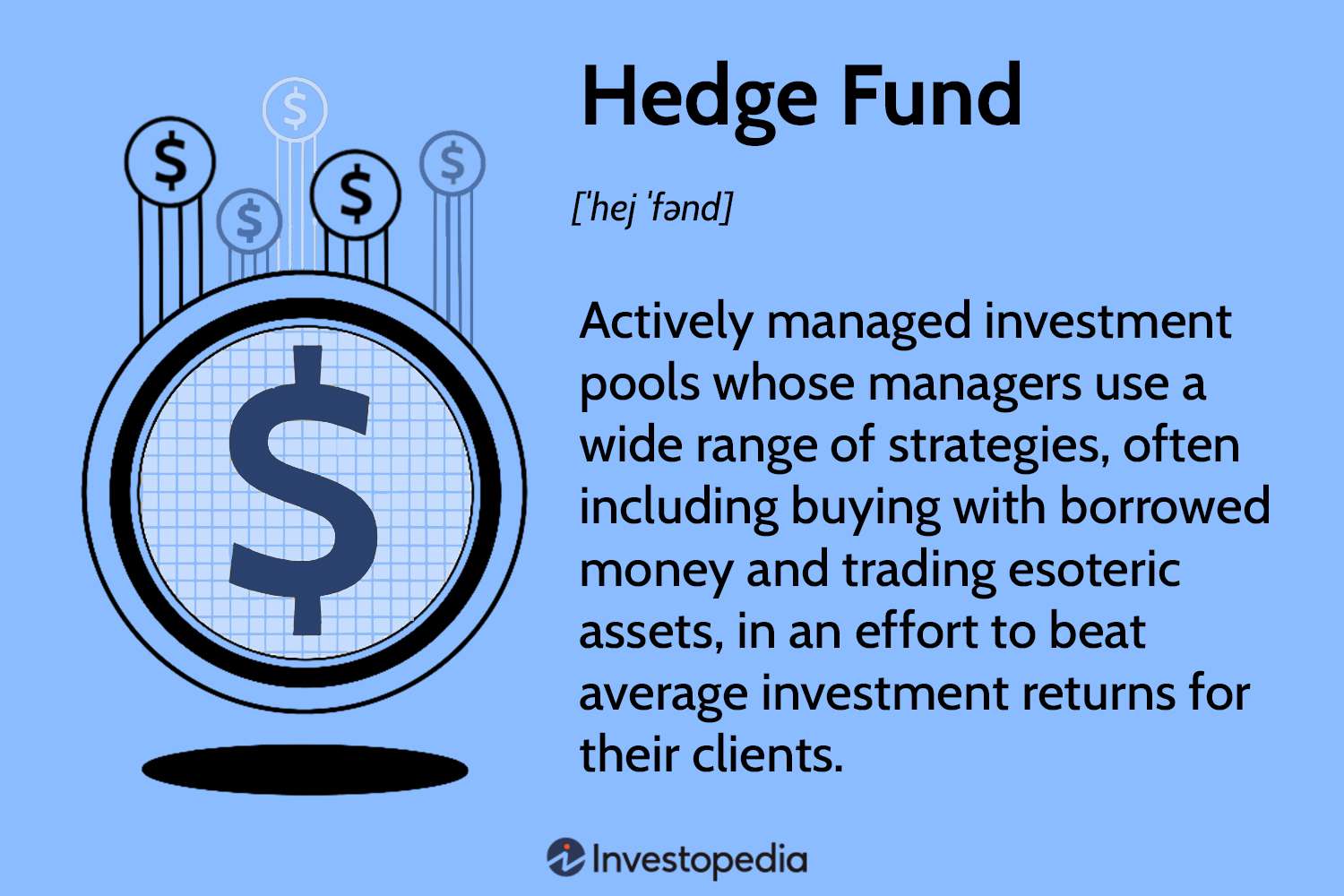
Hedge funds are usually built to pursue alpha: higher-risk, higher-upside market opportunities that aim to outperform normal benchmark-style investing.

They are generally very different from mutual funds and ETFs, which are typically more standardized, more constrained, and more benchmark-oriented.

Hedge funds also tend to operate with different rules, broader trading freedom, and tighter focus on systematic risk-managed execution.

Market dashboard and trading screens Operating Context

Institutional markets run on dense, always-on information flow

The backdrop for any serious hedge-fund system is not a simple chart. It is a live environment of monitoring, signal interpretation, and constant workflow coordination across screens, tools, and time horizons.

Live market state has to be monitored continuously, and execution quality depends on how well research, data, and operations stay synchronized.

That is the type of control environment Breakeven is trying to reproduce in a more efficient system design.
Problem

Quantitative hedge fund systems work well, but access to them is restricted

The issue is not whether these systems create value. The issue is that most capable investors cannot reach them because the cost structure is too high.

Traditional System Flow
Why Traditional Model locks out most serious investors
Every dependency inflates cost — and that cost gates access
$
$
$
$
Capital Gate
$500K–$1M+
minimum entry
Expensive Compute
$50K–$300K+ hardware
Specialist Talent
$900K–$1.8M+ annual
Proprietary
Data Access
Bloomberg · alt-data
sentiment · options flow
$50K–$500K+/yr
$1M–$2M+
annual overhead
Inflated Cost
Structure
Salary · hardware
data · operations
HNI · UHNI
retail excluded
Benefits locked away from retail investors
Advanced Risk Management
Drawdown limits, VaR controls & dynamic position sizing that protect capital through volatile regimes
✕ not available to retail
$
$
$
Profit on Falling Markets
Systematic short strategies and hedges generate positive returns even when markets are trending downward
✕ not available to retail
Dynamic Capital Allocation
Automated rebalancing and position weighting that continuously optimises exposure across market conditions
✕ not available to retail
Systematic Execution
Emotion-free, rules-based order execution with backtested signal logic running 24/7 without fatigue or bias
✕ not available to retail
Execution Quality & Speed
Co-location, DMA & sub-millisecond fills. Retail receives last-priority routing while institutions consistently gain price improvement
✕ not available to retail
Cross-asset Correlation Hedging
Equities, futures, FX and commodities traded as a unified portfolio — retail trades single instruments with no correlation awareness
✕ not available to retail
Adaptive Model Retraining
ML models continuously retrain on new market regimes — static retail strategies decay while institutional systems evolve and stay edge-positive
✕ not available to retail
Multi-strategy Portfolio Construction
15–30 uncorrelated strategies run in parallel so any single drawdown is absorbed — producing a structurally superior Sharpe ratio unreachable by retail
✕ not available to retail
Net outcome: The cost barrier doesn't just block entry — it locks retail investors out of every meaningful edge these systems provide: protected capital in downturns, profit in bear markets, intelligent allocation, and disciplined execution. Only HNI and UHNI clients access the full stack.
The Wall

Four structural barriers between retail capital and quant-grade edge.

01 Capital

Capital concentration

Extremely high minimums and institutional structures screen out most serious participants early — before performance is ever measured.

Severity Critical
$1M+ typical entry threshold
02 Infrastructure

Operational overhead

Dedicated hardware, market data feeds, and execution infrastructure make smaller-scale deployment structurally inefficient.

Severity High
$50K – $300K+ upfront hardware spend
03 Talent

Talent scarcity

Core workflows depend on narrow, high-cost labor pools — quant research, low-latency engineering, and platform operations.

Severity Critical
$0.9M – $1.8M+ lean team / year
04 Access

Knowledge & access gap

DIY participants lack the technical depth and institutional relationships needed to assemble and run the full stack alone.

Severity High
Gatekept vendor & venue relationships
Composite Effect

The four walls compound. Each barrier multiplies the others — capital alone doesn't solve infrastructure, infrastructure alone doesn't solve talent, and none of it solves access. Only HNI and UHNI tiers clear all four.

Infrastructure Friction

Traditional deployments carry hardware and operational drag from day one

Once infrastructure becomes specialized, expensive, and tightly controlled, access narrows quickly. The system stops being about raw strategy quality and starts being about who can afford the machinery around it.

Dedicated hardware stacks create fixed cost before performance is proven.
Operational resilience requires far more than a single machine and a trading idea.
That cost structure is one of the main reasons smaller serious operators get screened out.
Industrial control cabinets representing costly infrastructure Capital-heavy setup
Labor Reality

What kind of team traditional systems usually require

  • Quant researcher or portfolio scientist: builds signals, validates models, studies regime changes, and monitors performance decay. In U.S. institutional markets, this kind of senior profile can easily sit around $175,000-$350,000+ in base compensation before bonus.
  • Quant developer or data engineer: builds the data pipelines, backtesting framework, feature generation, and data quality controls. A capable hire here can often land in roughly the $140,000-$250,000+ range.
  • Execution or low-latency engineer: handles broker connectivity, order routing, exchange-specific logic, and performance tuning. For high-skill market infrastructure work, $170,000-$300,000+ is not unusual.
  • DevOps, SRE, or platform engineer: keeps the environment stable, deployable, secure, and observable across production and research systems. A serious hire here often falls around $140,000-$230,000+.
  • Risk, operations, and controls support: handles reconciliation, reporting, monitoring, entity-level operating discipline, and control processes. That can add another roughly $120,000-$220,000+ depending on scope.

Even a lean 4-6 person core team can push annual salary expense toward roughly $900,000-$1.8M+ before bonuses, benefits, payroll taxes, legal spend, and other operating overhead.

Infrastructure Reality

What kind of hardware and systems typically drive cost

  • Market data feeds and licensing: live and historical data, exchange permissions, and vendor contracts can range from roughly $25,000 to $250,000+ per year depending on asset class, venue coverage, and latency needs.
  • Research compute and storage: high-memory CPU servers, GPU boxes, fast local storage, backup infrastructure, and lab machines can easily require about $50,000-$300,000+ in upfront hardware for a serious in-house setup.
  • Cloud research and backtesting: if large simulations, archived datasets, logging, orchestration, and monitoring run in the cloud, monthly spend can move into the $5,000-$40,000+ range once usage is real.
  • Execution infrastructure: colocated servers, low-latency network links, broker connectivity, failover, and redundancy can add another roughly $2,000-$20,000+ per month, and more if multiple venues are involved.
  • Security, recovery, and tooling: secrets management, disaster recovery, compliance tooling, vendor software, and system monitoring can add tens of thousands more each year.

These ranges are illustrative examples rather than price quotes, but they reflect why professional trading infrastructure becomes expensive very quickly once reliability and scale matter.

Why Capital Requirements Rise

High capital minimums are often a direct consequence of labor and infrastructure cost

Once a team is carrying a large fixed cost base, small pools of capital stop making economic sense. If a traditional operation has $1.5M in annual fixed labor and infrastructure cost but only $3M-$5M in deployable capital, the overhead burden becomes so high that a huge portion of gross performance is consumed just keeping the system alive.

  • At $3M of capital with $1.5M of fixed cost: overhead is effectively about 50% of capital before investor profit is even discussed.
  • At $20M-$30M of capital with the same cost base: the fixed-cost burden drops into a range that is far more plausible for a professional operation.
  • This is why the DIY path breaks down: a single capable trader may understand markets, but rarely also has deep competence in data engineering, distributed systems, execution infrastructure, operational controls, and institutional setup.

This is the economic logic Breakeven is trying to compress: fewer expensive specialists, more AI-managed workflow, and a compute design that does not force the same institutional capital threshold.

Solution

Breakeven is building an AI-controlled quantitative trading infrastructure

The model replicates core hedge-fund-level capabilities through AI-managed workflows and distributed compute, lowering both initial and ongoing operating costs.

What the system does
  • Uses an AI agent to manage strategy research, optimization, and decision workflows.
  • Distributes compute workloads across multiple lower-cost nodes.
  • Automates tasks traditionally handled by high-cost quant professionals.
  • Reduces both initial capital requirements and ongoing operating costs.
  • Makes institutional-style trading workflows more accessible without requiring a full traditional hedge fund team.
  • Coordinates research, compute, and execution as one connected operating system instead of separate manual processes.
  • Creates room for continuous strategy updates, testing, and future system improvement over time.
  • Keeps the core quant system usable across any market with price data, making expansion possible across crypto, forex, stocks, bonds, commodities, and similar markets.
  • Builds a more scalable structure where more of the edge comes from system design and automation rather than only expensive human labor.
Breakeven Token Utility and reward token built on Solana

Breakeven Token is positioned as a Solana-based utility and reward token inside the broader Breakeven ecosystem.

In the ready Breakeven Distributed Slave Software, it functions as a reward token.

Over time, it is also intended to become an access token for using the Breakeven Trade Client and other relevant platform functions across the network.

Architecture view
01
Distributed Workers

Breakeven Distributed Slave Software

Multiple client-side compute slave workers handle the distributed workload across the network — the backbone of low-cost processing capacity.
Routes via
02
Coordination Hub

Breakeven Relay

Coordinates communication, routing, and system traffic between distributed slave nodes and central master systems. ↗ relay.breakeventx.com
Validates via
03
Core Orchestration

Breakeven Master Side Compute

Centralized compute for core orchestration, validation, and system-level control — keeps the distributed fabric coherent and reliable.
Directed by
04
AI Decision Brain

Breakeven AI Agent: Simon

Simon sits above the compute layers and manages research, optimization, logic flow, and decision-making. The master compute and trades client do whatever Simon says — like the game, but for markets.
Executes via
05
Execution Output

Breakeven Trades Client

The final execution-side client receives managed output from Simon and the surrounding compute stack — turning decisions into live market actions.
System Architecture

Breakeven shifts from one expensive core to a coordinated compute fabric

The solution is architectural, not cosmetic. Distributed nodes, relay coordination, master-side validation, and AI-led decision flow create a system that can scale through orchestration instead of only through centralized spend.

Distributed workers absorb research and processing load across lower-cost nodes.
Relay and master layers keep routing, control, and validation coherent.
AI becomes the operating layer that coordinates the system instead of just assisting it.
Distributed endpoint network with Breakeven servers Distributed endpoint network

How the three approaches solve the four major problems

Each approach reduces a different part of the cost, hardware, labor, and access problem.

01

AI Agent

Cuts labor Cuts cost

AI agents are increasingly replacing white-collar work, and that is exactly the role they play here. They take over research, optimization, monitoring, and decision work that would normally require expensive professionals.

That directly cuts major operating cost, makes the system more efficient than human-led workflows, and creates a path for continuous integration of new strategies over time.

Talent scarcity barrier removed
02

Distributed Compute

Cuts hardware Scales

Distributed compute directly solves the problem of centralized hardware infrastructure. Instead of relying on one expensive central setup, workloads are spread across many lower-cost nodes.

This lowers hardware cost, reduces infrastructure concentration, and makes the system easier to scale without building a full institutional compute stack upfront.

Infrastructure overhead barrier removed
03

Breakeven Token Ecosystem

Cuts capital Opens access

The Breakeven token ecosystem reduces direct upfront fiat capital requirements and gives the project a way to raise capital for early development and deployment.

It also creates a pathway for revenue generation, ecosystem participation, and long-term value maintenance around the project.

Capital concentration barrier removed
Inspiration

Jim Simons is a core intellectual reference point for Breakeven

Research Culture

The project is inspired by mathematics, rigor, and repeatable reasoning

Breakeven’s intellectual direction is closer to a lab mindset than to finance theater. The model values disciplined inquiry, model testing, signal extraction, and system design over personality-driven market narratives.

Mathematics frames markets as structured problems that can be studied and iterated.
Scientific discipline matters because fragile intuition does not scale into infrastructure.
That is the cultural logic behind naming the AI layer Simon.
Professor studying complex equations on a chalkboard Mathematics-first thinking
Jim Simons Inspiration Why Jim Simons matters to Breakeven and to people from outside commerce backgrounds
Jim Simons portrait
Jim Simons James Harris Simons
April 25, 1938 - May 10, 2024

Simons moved from pure mathematics, geometry, codebreaking, and scientific reasoning into finance and helped prove that markets could be attacked as a logic, pattern, and data problem rather than as a personality-driven sales culture.

Simon represents the belief that high-end trading systems should be driven by structured reasoning, mathematics, system design, and research discipline rather than by inherited Wall Street convention and finance pedigree alone.

Why he matters A blueprint for edge without pedigree
  • Jim Simons is one of the clearest examples that elite quantitative finance does not have to begin with a commerce, banking, or traditional Wall Street background.
  • His example showed that deep mathematical thinking, statistical reasoning, pattern recognition, and scientific rigor can create a stronger edge than conventional finance storytelling.
  • He is especially relevant to Breakeven because he showed that pure mathematics, game theory, logic, and disciplined model-building can become the foundation of a world-class quant operation.
  • For people coming from mathematics, physics, computer science, engineering, and other analytical disciplines, he became a symbol that intellectual depth can matter more than finance pedigree.
How he built teams Scientists over discretionary traders
  • Jim Simons became known for building teams around mathematicians, physicists, statisticians, computer scientists, cryptographers, and other research-heavy professionals rather than relying mainly on traditional discretionary traders.
  • The underlying idea was that markets could be approached as a scientific and data problem, not only as a conventional finance problem.
  • The results were so extreme that Simons is often discussed as operating on a level that outperformed even many of the most famous long-term investing legends associated with names like Warren Buffett.
  • That philosophy directly inspires the Breakeven AI agent, Simon: a system named in recognition of Jim Simons and the scientific approach he brought into quant finance.
Achievements Why Jim Simons became a legend in quantitative finance
  • Jim Simons became widely associated with the phrase The Man Who Solved the Market because he helped prove that markets could be systematically attacked with mathematics, data, signal extraction, and disciplined model iteration.
  • Renaissance Technologies and the Medallion Fund became famous for extraordinary long-run results. Publicly cited historical summaries often describe Medallion as generating roughly 66.1% average annual gross returns and about 39.1% average annual net returns between 1988 and 2018.
  • The Medallion Fund is also frequently described as having produced more than $100 billion in trading profits over its lifetime, which is one of the reasons Simons is often placed above most traditional investing icons in pure performance discussions.
  • More broadly, Renaissance helped make quantitative finance itself famous by showing that a research-first, computation-heavy, scientist-led organization could dominate a field long associated with instinct, personality, and discretionary market judgment.
Our take What Breakeven wants to learn and push further
  • Breakeven's interpretation is that the next major step is not just quant systems driven by mathematicians and engineers, but quant systems where AI absorbs a growing share of the white-collar analytical workflow itself.
  • Hedge funds are heavily white-collar institutions. Research, optimization, monitoring, reporting, execution logic, and operational review have already been progressively computerized over the years, which makes the environment a strong candidate for deeper AI control.
  • Breakeven's thesis is that if traditional physical bottlenecks have already been reduced and the system is now mostly digital, rules-based, and data-rich, then AI can take over a greater portion of the workflow and replace a meaningful amount of repetitive human overhead.
  • That is the step further Breakeven is aiming for: not only quant as science, but quant infrastructure where AI becomes a central operating layer across research, compute coordination, and execution management.
User / Market

Breakeven is positioned as B2B investment infrastructure

There are no customers in this model — only partners. Retail participants who otherwise lack the capital, infrastructure, or access to engage with hedge-fund-grade quantitative finance are first sincerely educated on the risk profile of the strategies deployed. Only after their explicit acknowledgement of those risks are they brought into the operating design as structured investment partners.

Partner type Investment vehicles

Structured entities that want institutional-grade backend systems.

Typical examples
  • Registered investment clubs — friends, alumni, or community groups pooling savings under a legal wrapper.
  • Small partnerships & LLPs formed by everyday investors who want to run capital together.
  • Cooperatives & member-owned funds built to give regular savers institutional-grade execution.
  • Trusts and registered vehicles that pool modest amounts of capital with formal governance.
Partner type Capital-holding companies

Businesses with deployable capital that need quantitative infrastructure and execution.

Typical examples
  • Mom-and-pop shops, restaurants & retailers sitting on working capital they want to put to work.
  • Hardware stores, garages, clinics & local service businesses with reserves between operating cycles.
  • NGOs, NPOs & community foundations managing program funds, endowments, or grant reserves.
  • Libraries, gyms, clubs & community institutions with development, maintenance, or member-funded pools.
Partner type Private investor consortiums

Private groups seeking professional strategy, risk, and operations management.

Typical examples
  • Friends, family & neighborhood groups pooling savings to access strategies they couldn't run alone.
  • Alumni networks, coworker pools & trade associations coordinating capital across a shared community.
  • Sports clubs, religious communities & cultural groups running member-contributed investment pools.
  • Any private group of investors who agree on the strategy, pool capital, and accept the risk together.
Business Model

Breakeven manages the infrastructure and earns on performance

Model summary
  • Breakeven retains full control of proprietary systems, AI models, and infrastructure.
  • Partners supply investment capital through structured entities.
  • Breakeven can earn a management fee for operating the infrastructure, systems, and oversight layer.
  • Breakeven can earn a performance fee based on profits generated through managed execution.
  • Breakeven can charge a system gas fee for platform usage, processing, or network-level operational activity, and that gas fee would be paid exclusively in token.
  • The token ecosystem can also support creation of a market around token utility, access, and participation across the broader Breakeven network.
  • No sale of signals, courses, or retail subscriptions.
Why it scales
Aligned incentives

Performance fees keep Breakeven aligned with capital performance, while management fees support ongoing system operation and maintenance.

Capital-based scaling

The model scales through managed capital, system usage, token-only gas-style platform fees, and token-market activity rather than depending only on headcount growth.

Token market creation

A token-based ecosystem can create its own internal market around access, utility, incentives, and broader network participation.

Execution Rails

The business model turns system control into an operating and performance layer

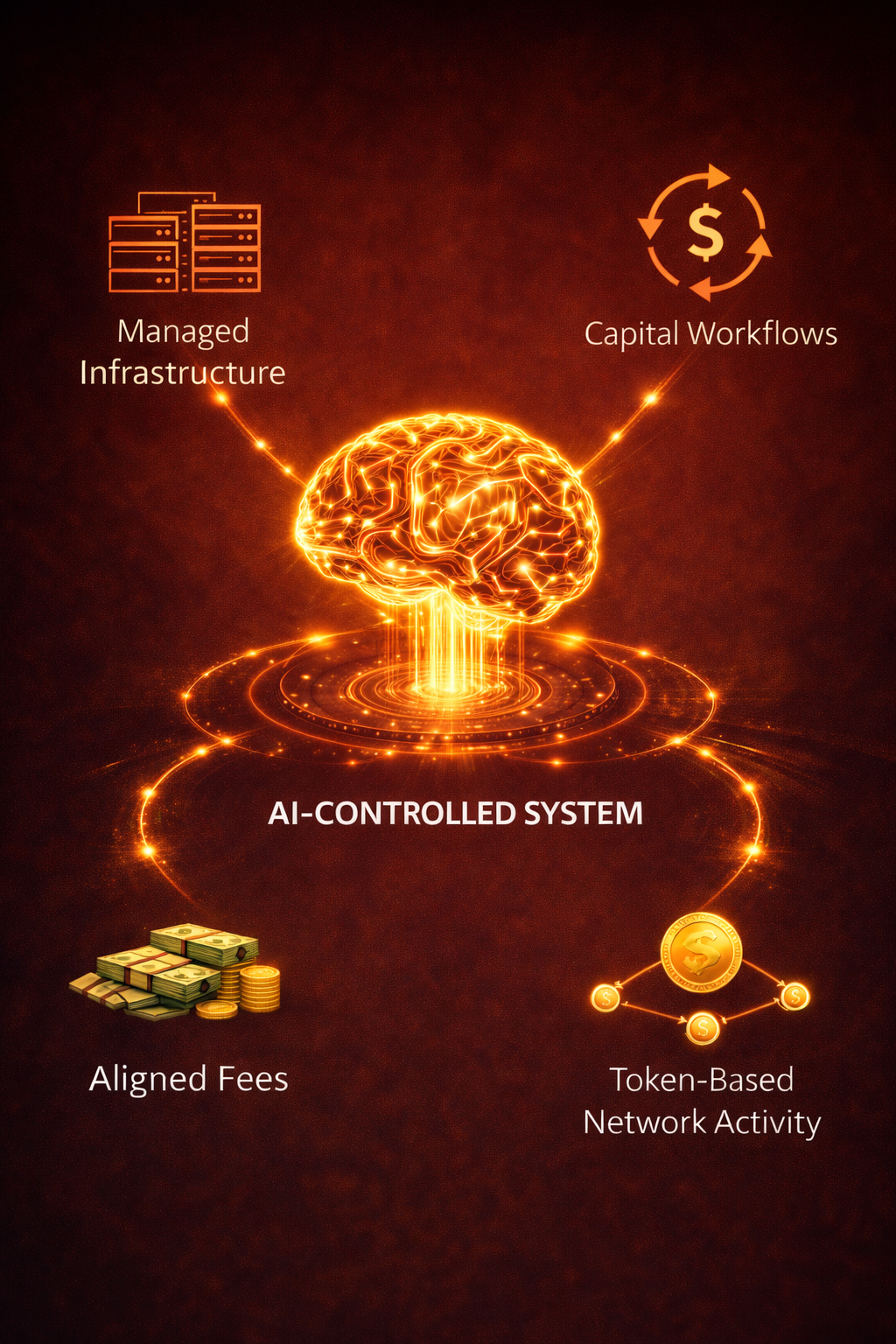
This is not a content business and not a signal-selling business. The model is built around managed infrastructure, capital workflows, aligned fees, and token-based network activity tied to real system usage.

Management and performance fees align the system with capital outcomes.
Execution, oversight, and processing become part of the core operating rails.
Token-only gas-style activity creates a separate network utility channel around usage.
AI-controlled financial management system interface Managed execution rails
Why Breakeven Is Different

Focused on systemized intelligence and cost efficiency

The differentiator is not branding language. It is the structure of the operating system itself.

Compute Eliminates centralized compute dependency

Breakeven is designed to reduce dependence on expensive centralized infrastructure.

Talent Reduces reliance on scarce high-salary quant talent

More of the workflow is formalized into infrastructure and automation.

Intelligence Systemized intelligence over individual traders

The edge sits in engineered process, not personality-driven trading myths.

Capital Efficiency Targets capital efficiency, not asset-gathering hype

The infrastructure is built for disciplined performance and scalable execution.

Current Stage / Progress

Prototype development is underway

The system is already beyond idea stage. Some core prototype layers are ready, while other layers are still being developed, refined, and prepared for deployment.

✓ Ready Live Prototype
Layers 01, 02 & 03 prototypes are ready
Stage 01
Layer 01: Breakeven Distributed Slave Software prototype is ready.
Layer 02: Breakeven Relay prototype is ready.
Layer 03: Breakeven Master Side Compute prototype is ready.
The foundational compute and routing stack is already built beyond concept stage.
✓ Ready Deployed
Crypto token design and deployment are complete
Stage 02
The crypto token design has been finalized and deployed.
Smart contracts are live and operational.
The token is now integrated as part of the broader ecosystem infrastructure.
Token functionality supports compute contribution rewards and system governance.
In Development 4–8 Months
Layer 04 AI Agent Simon is under development
Stage 03
Layer 04, Breakeven AI Agent Simon, is being developed as the decision-making and research-control layer.
Simon will sit above the compute architecture and manage core system logic.
Layer 04 is expected to take about 4 to 8 months to be ready.
In Development 6–12 Months
Layer 05 trade client integration and testing
Stage 04
Layer 05 Breakeven Trades Client is being integrated with Layer 04 AI Agent Simon.
Full system integration requires Simon's decision-making layer to be operational.
End-to-end Layer 01–05 prototype testing is scheduled for the next 6–12 months.
This stage runs parallel with Layer 04 development to ensure seamless integration.
Forever Development
Continuous development and market expansion continue
Stage 05
Once all layer prototypes are ready, they will enter a continuous development cycle.
Even ready layers will keep being improved with new features and stronger integration.
The system is being prepared for more markets including forex, stocks, bonds, and commodities.
New trading platforms will be added over time.
Forever Development
AUM scaling and strategy selection will evolve over time
Stage 06
Additional AUM levels will be supported.
As AUM increases across different assets and markets, strategy selection becomes more important for matching the right alpha to the right scale and setup.
Compatible alpha strategies will be developed and selected based on the market, asset class, platform, and capital level involved.
Vision

Democratize access to institutional-grade quantitative infrastructure

The long-term objective is precise: reduce elite-only barriers without giving up professional discipline.

Long-Range Direction

The destination is broader market access across a connected global system

The long view is larger than a single strategy or market. Breakeven is being shaped as a multi-market operating system that can extend across asset classes, capital sizes, and future execution environments while keeping a unified control layer.

The same architecture can expand into forex, equities, bonds, commodities, and other data-rich markets.
Accessibility improves when professional-grade tools stop being fragmented and gatekept.
A connected global system needs strong coordination, not just more isolated software components.
Earth at night with global city lights Global market horizon
Long-term objective Enable capable investors to participate in sophisticated markets without elite-only barriers

Breakeven’s long-term goal is to democratize access to institutional-grade quantitative trading infrastructure while maintaining professional risk management, transparency, and scalability.

That democratization is achieved by substantially reducing the cost of entry that usually keeps institutional-level trading out of reach. Instead of requiring large capital bases, expensive specialist teams, proprietary software stacks, and fragmented infrastructure, Breakeven is designed to compress those costs into a more efficient and accessible system.

The result is access for a completely new segment of investors and operators who were historically excluded from this level of market participation. Many capable people have never had a real path into institutional-grade trading because the finance industry often depends on gatekept tools, closed strategies, proprietary workflows, and infrastructure that is difficult and expensive to access. Breakeven’s approach is to rebuild that stack from the bottom up as a more unified all-in-one solution.

This design is also meant to accommodate more traditional, naive, and layman users alongside more technical participants. The goal is not to expect every user to already understand the full institutional machinery. The goal is to wrap research, compute, execution, access, and infrastructure into a system that is easier to approach while still preserving serious professional standards underneath.

  • Lowers cost of entry by reducing dependence on expensive labor, hardware, and proprietary finance infrastructure.
  • Opens institutional-grade market access to investors who were previously excluded from these systems.
  • Rebuilds around formerly gatekept software, tools, strategies, and infrastructure in a more unified structure.
  • Makes participation more realistic for both advanced users and less technical users through a more complete all-in-one operating design.
Utility-first token architecture for a compute-native network
BreakEven Token coin

BreakEven Token Economics

BreakEven Token (BE) is designed as the utility layer for network contribution, system usage, and ecosystem coordination. The initial mint is 5,000,000 tokens, there is no public sale or investment offering, and distribution is based on verified work, real participation, and network demand.

Economics Control Deck Solana SPL utility layer
Initial Mint 5,000,000

Supply starts with a fixed initial mint designed to seed the ecosystem without a public offering.

Public Sale None

BE is not launched through a public sale or investment offering.

Distribution Basis Verified Work

Tokens are earned through network contribution and useful system participation.

Supply Expansion Adaptive

Additional issuance may happen only when required for network operations and ecosystem growth.

Token Overview

BE connects contribution, access, and ecosystem activity

BE is designed to align contributors, operators, and users through a single utility layer that reflects actual network work and service usage.

What It Is

BE is a functional token layer for the BreakEven network, designed to coordinate compute, data work, and access to system features.

What It Is Not

It is not structured around passive holding, speculative yield mechanics, or a public investment sale. Its purpose is utility inside the ecosystem.

Why The Model Stands Out

Startup-grade token UX, anchored to real network behavior

The economics model is designed to feel modern and scalable without losing discipline. Supply begins clearly, issuance is conditional rather than automatic, and value flow stays tied to work, usage, and operational growth.

Initial mint starts the system without a public sale
Verified work and usage drive distribution
Transparent issuance rules keep expansion accountable
Futuristic control interface representing network coordination Utility interface layer
Ecosystem Value Loop

BE is the operating layer between work performed and services used

BE links the network's supply side and demand side: contributors earn through useful output, and users spend for access, integrations, and system functionality.

BE TOKEN SUPPLY Workers REWARD Earned ACCESS Services GROW Network
Supply Side
Rewards compute & data contribution
The largest allocation is reserved for contributors doing verified work that helps operate and extend the network.
Demand Side
Unlocks access to BreakEven services
Users can use BE to interact with system modules, premium services, and future application layers across the network.
Expansion
Supports ecosystem growth & integrations
Part of the allocation is dedicated to onboarding partners, integrations, and use cases that expand utility.
Long Horizon
Feeds treasury & liquidity support
Treasury, reserve, and liquidity buckets provide operational flexibility as the network matures over time.
Economic Flow

Distribution follows contribution, usage, and system-level feedback

Network Flow
  • Participants contribute compute, data work, or system-supporting output.
  • Verified contribution is recognized through token distribution.
  • Users and partners acquire BE for access, integrations, and service use.
  • Treasury and reserve capacity support development and resilience.
  • Future issuance responds to operational need, not passive speculation.
Economic Logic

The system is designed to reward useful participation and real network activity. BE is not intended to depend on holding alone or short-term speculation to justify its role.

Token Supply & Economics

Supply starts clearly and expands only when operations justify it

Initial Mint 5,000,000 tokens
Public Sale None
Expansion Policy Only for operations and growth
Issuance Trigger Demand, usage, and internal rules
Supply Posture Additional tokens are not automatic

New tokens may be created only when required for network operations and ecosystem growth. Any future issuance is intended to follow transparent internal rules and stay aligned with system demand, performance needs, and usage patterns.

Distribution Model

All issuance follows the same ecosystem allocation model

Interactive Allocation View

Hover or select a segment to inspect how issuance is structured

The allocation logic is weighted toward contribution and network growth, with smaller buckets reserved for treasury continuity, liquidity support, and strategic flexibility.

Network Rewards Compute & Data Work 50%

The largest allocation is reserved for verified compute and data contribution across the network.

Development & Treasury Build, operate, improve 20%

Supports development velocity, treasury functions, and ecosystem continuity.

Ecosystem Growth Integrations and expansion 15%

Designed to support integrations, partnerships, and utility growth across new modules.

Future Liquidity Support Operational market support 10%

Reserved for future liquidity support as the ecosystem and token utility mature.

Reserve Strategic flexibility 5%

Maintains a reserve for resilience, contingencies, and future strategic needs.

Allocation Scope

The allocation model applies across both the initial mint and any future issuance. The intent is to keep the majority of token flow aimed at work performed and ecosystem utility rather than passive ownership.

Expansion Rules & Fair Usage

Supply can adapt, but only when network conditions call for it

Additional Issuance
  • New issuance may occur only when required for network operations.
  • Growth-related issuance is intended to support real ecosystem expansion.
  • Expansion is guided by transparent internal rules.
Fair Usage Principles
  • Distribution is based on verified work.
  • Contribution to the network is the main qualification.
  • The system does not rely on passive holding mechanisms.
  • The model is not built around speculative token loops.
Ongoing Development
  • Token economics remain under active development.
  • Adjustments may be made for network requirements and performance.
  • Future refinements may support evolving project use cases.
Utility & Interaction

BE is built for access, contribution, and ecosystem coordination

Current & Future Utility
  • Access to BreakEven products and service layers.
  • Payment for compute, data, and platform functionality.
  • Participation in integrations and future module access.
  • Reward coordination for useful contribution.
Economic Direction

The token model is meant to support a durable operational loop: contributors help the network, users access services, and the ecosystem reinvests into growth, development, and resilience.

  • Utility before speculation
  • Operations before hype
  • Network demand before automatic expansion
  • System usage as the anchor for future changes
Interactive Economics Layer

Designed to feel premium while staying operationally disciplined

The strongest token experiences do not just look advanced. They make the logic legible. BE is framed to show visitors a clear path from network contribution to ecosystem growth.

Contribution creates earned distribution
Usage creates demand for access and services
Treasury and reserve support long-term continuity
Crypto analytics dashboard showing token utility and interaction Usage and access flow
Transparency & Participation Notice

Utility-first structure, no public offering, evolving economics

Trust Surface

Transparency matters because utility tokens still need clear risk framing

The project should read as operational infrastructure, not as a vague promise. Clear participation language, no-public-sale positioning, and visible security posture make the token easier to evaluate on function rather than hype.

No public offering or equity-like framing.
Utility, access, and contribution remain the center of the model.
Transparency improves when visitors can see the system through a trust and security lens.
Hardware wallet and keyboard representing digital asset security Security and custody context
Transparency
  • Blockchain target: Solana
  • Token standard: SPL
  • Initial mint: 5,000,000 tokens
  • Public sale: none
Development Status
  • Token economics are in continual development.
  • Adjustments may be made as the network evolves.
  • Updates are intended to better align with system performance, network requirements, and future use cases.
No Public Offering
  • BE is not offered through a public sale.
  • BE is not presented as an investment offering.
  • Distribution is linked to system usage and contribution.
Fair Usage
  • Holding alone is not the basis for distribution.
  • Verified work remains central to the model.
  • The system is not built around passive or speculative incentives.
Participation Notice

BE is intended as a utility token within the BreakEven ecosystem.

  • It does not represent equity, ownership, or guaranteed returns.
  • Participation in digital assets still involves risk.
  • Visitors should evaluate the token based on utility and understanding.
Intended Purpose

BE is designed as a working component of the BreakEven ecosystem, not as a detached financial promise.

  • Enable access to system features and services
  • Coordinate internal value exchange within the network
  • Incentivize contribution and ecosystem participation
Economics Outlook

The economics framework will continue to mature as the network grows. Any refinements are expected to stay tied to system requirements, performance realities, and evolving product use cases.

Disclaimer
  • BE is a utility token intended for use inside the BreakEven ecosystem.
  • It does not represent ownership, equity, or guaranteed financial returns.
  • It is designed to scale in utility as new systems and capabilities are introduced.